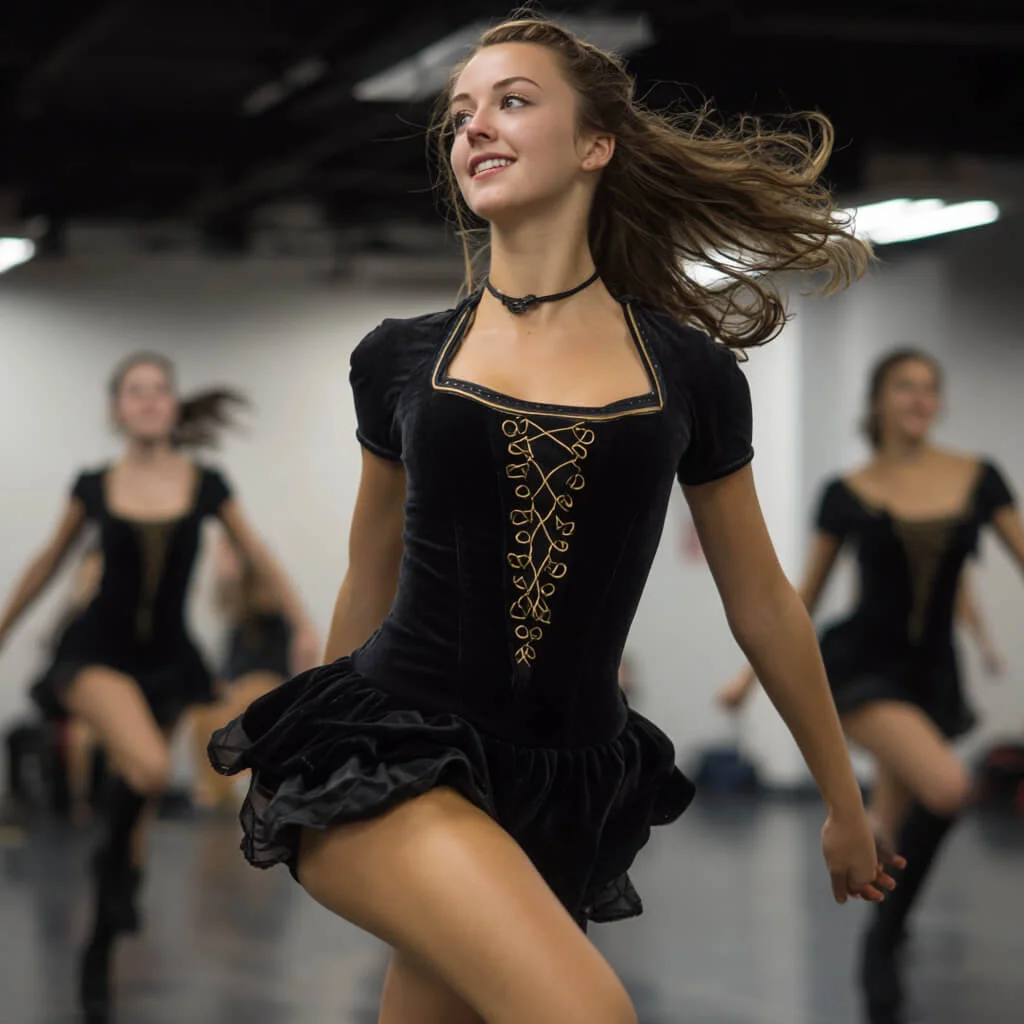
Irish Dance Classes in SouthamptonFor the craic, not for the medals.
Irish dancing around here is largely run as a competitive sport — wigs, circuits, championship classes and children being very good at it from the age of six. This list is for the entirely different thing: adults who want to learn a few reels, get the footwork roughly right and enjoy an hour of it with nothing at the end to win. Add your name, and when there are enough of you we hire a room, book a teacher and email everyone the start date. It runs at £10 a session or £32 for four weeks in a row.
Enough names makes a ceili.
Five details and roughly thirty seconds, with nothing owed afterwards. We ask for a postcode because a hired room with a hard floor near the Bargate suits a very different list to one out towards the cruise terminals. The start date reaches this list before it reaches anybody else.
All the footwork, none of the scoring.
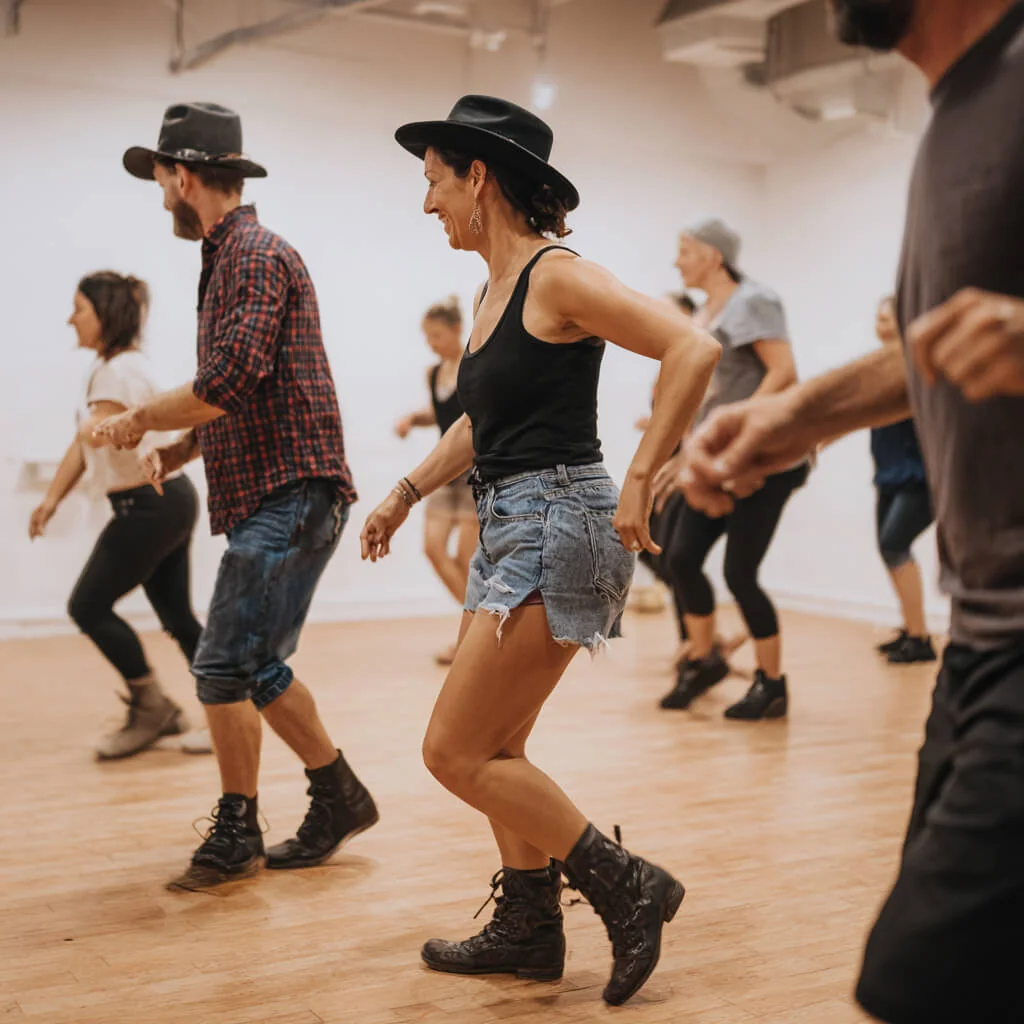
Two things make Irish dance a brilliant adult beginner class, and both of them get lost in the competitive version. The first is that the group dances — the ceili sets, the walls of three, the circles — become genuinely fun within about twenty minutes of learning them and demand no talent whatsoever. The second is that solo footwork is pure counting and repetition, which means steady adults get good at it while naturally gifted people get bored. Nothing here is marked, placed or entered into anything.
No competitions, ever. No feiseanna, no gradings, no medals, no championship track. That world exists locally and is run properly by other people; this simply is not it.
No wigs, no costumes. Nobody dresses up for a weekly class. Soft shoes or plain trainers and clothes you can move in cover the whole requirement.
Group first, solo second. Most of an evening is danced alongside other people, which is why it is such an easy room to walk into alone.
What an Irish dancing evening usually holds.
once the list fills — the teacher builds their own version of thisFeet, then time
The first stretch is posture, the seven, the sidestep, and getting weight onto the balls of your feet, all counted slowly and out loud.
A set with other people
Group dances early, because they are the quickest route to actually enjoying yourself. Which sets appear, and how fast, is the teacher’s decision.
One reel, at speed
The hour closes by running something at proper tempo, which is when a room stops concentrating and starts grinning.
teachers build their own evenings — treat this as flavour rather than a running order
Pay as you go. Nothing is signed, and a missed week costs you exactly nothing.
Four consecutive evenings is about when the sidestep stops requiring your full attention.
A name here makes the class happen and puts the launch email in front of you early. Nothing more than that.
you can see the cost before speaking to a single human being, which seems only fair
A port with old Irish traffic.
Southampton has been taking Irish passengers and crews through its docks for well over a century, and the city’s Irish clubs and music sessions never entirely went away. What it does not have is a low-stakes adult class — nearly everything visible locally is aimed at children on a competition track. A weekly hour near the Bargate where grown adults learn a reel badly and then rather less badly, at a price printed on a page, is a gap wide enough to walk through.
It travels. Weddings, sessions and any pub with a fiddle in it get considerably more entertaining once you know a single set.
Hard floors wanted. Your postcode helps aim the search, since Irish footwork needs a surface that answers back rather than carpet.
Irish dancing, answered plainly.
nine things asked before anyone puts a name down ↓
Is this a competitive Irish dancing class?+
No, and deliberately so. There are no feiseanna, no gradings, no medals and no championship pathway attached. This is a social hour for adults who want the dancing without a scoreboard, and if competition later appeals, other people locally do that side of it properly.
Do I need special shoes to start?+
Not at first. Soft, flexible shoes or plain trainers with a smooth sole will get you through early weeks, and ghillies are an optional purchase later if you take to it. We do not sell, lend or supply footwear.
Will we be doing group dances or solo steps?+
Both, with the balance decided by whoever teaches. Group ceili dances tend to dominate the early weeks because they are immediately enjoyable, while solo footwork gets built up quietly underneath. Neither needs a partner you have brought along.
What is the cost per session once live?+
£10 for one evening, or £32 for a block of four consecutive weeks. There is no membership, no registration charge, and joining the interest list costs nothing and commits you to nothing.
Is there jumping, and will my knees survive?+
There is bounce, though a beginner class keeps it low and builds slowly. Tell the teacher about anything that hurts and lower-impact versions of most things exist. Hard floors and cold calves are the risk, so the warm-up is not optional.
Do I need any Irish background at all?+
None. Rooms like this fill with people who have no connection to it beyond liking the music, plus a fair few who watched a show twenty years ago and never quite forgot it. Nobody will be asking about your grandmother.
When is this class going to begin?+
Once the interest list can cover the hire and a teacher’s evening. Irish dancing gathers names steadily rather than quickly, so early sign-ups genuinely matter here. The launch email carries the evening, the address and the first date.
Are there older beginners on this list?+
Plenty. The bracket closes at seventy-five on the form, and the top half of that range shows up wherever this style gets taught socially rather than competitively. Junior brackets collect names for a separate class entirely.
Can I put my name on other lists too?+
Yes, and plenty do. Each list counts and emails on its own, so being on several costs nothing and rules nothing out. Should two happen to launch in the same month, go to both.